Quick answer: The Best Most Secure Email Provider in 2025 is Disroot!
What is the most secure email provider? Many people ask this question.
Today, in 2025, using a protected email service is a matter of security and privacy. In this article, we will review the 13 most secure private email providers.
Which email provider is actually reliable? It’s true that email services such as Gmail, Outlook or Yahoo are easy to use. But do they protect our privacy? Unfortunately, the answer is NO.
Yahoo developed special software for the National Security Agency so that they could secretly check their users’ emails. During the trial, Google admitted to reading its users’ emails.
And when it comes to Microsoft, it is even worse. They were so generous that they helped the NSA monitor the users of Hotmail, Skype, and Outlook services within the PRISM project.
What are the criteria for choosing a reliable mail? Reliability is determined by the following factors:
Mail protection from hacking and interception by third parties.
Confidentiality — protection of information from the developers themselves
Refusal of developers to cooperate with governments and other agencies.
All services considered in this overview meet all of the above requirements. Or at least they say they do. Let’s take a look at the most reliable email services that provide mail encryption without sharing the user data with the authorities or other services.
NOTE: Add an extra layer of protection by encrypting your traffic with a VPN. See our list of recommended VPN services.
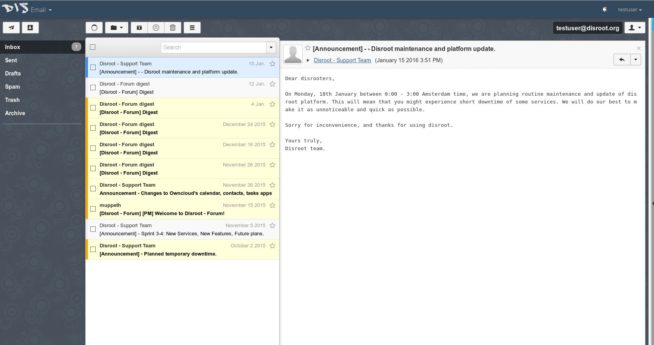
Disroot stands out as a secure and reliable encrypted email service provider, offering a range of features that cater to users who prioritize privacy and security in their email communications. Here’s why it’s a good choice:
Strong Privacy and Security Features: Disroot is committed to user privacy and security. It does not track emails, contain ads, or store unnecessary personal data about its users, making it an excellent option for those concerned about privacy.
Use of PGP Encryption: The service employs the latest and highly reliable Pretty Good Privacy (PGP) encryption protocol to protect emails. This type of encryption is known for being robust and unbroken, offering a high level of security for email communications.
User-Friendly Web Application: Disroot’s web application is noted for being easy to use with an attractive interface, enhancing the overall user experience.
Community-Driven Service: Having a big user community implies a level of trust and reliability, as well as opportunities for community support and feedback.
Additional Cloud Services: Apart from email, Disroot provides additional services like cloud storage and a cloud text editor through its partners, adding value beyond just email.
Ad-Free Service: The absence of ads contributes to a cleaner and more focused user experience, which is particularly appreciated by those who prefer an uncluttered interface.
Free Service with Encouraged Donations: Disroot operates on a donation model, making it freely accessible while encouraging users who can afford it to support the service financially. This approach makes it accessible to a wide range of users.
However, there are some drawbacks:
Lack of Mobile Apps: The absence of dedicated mobile apps may limit the convenience for users who rely heavily on mobile devices for email access.
Unclear Server Location: The lack of information about the location of the servers may be a concern for users who have specific requirements or concerns regarding data jurisdiction and laws.
In conclusion, Disroot is a commendable choice for those seeking a secure, privacy-focused, and user-friendly email service, particularly for users who are comfortable using web applications and do not require mobile apps. Its commitment to privacy, use of strong encryption, and community-driven approach make it a reliable option. However, potential users should consider the lack of mobile apps and unclear server location in their decision-making process.
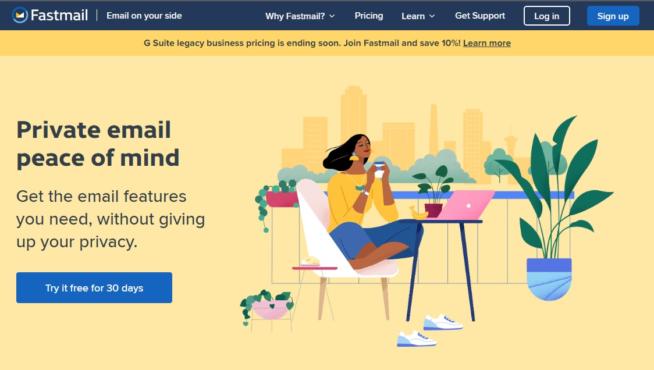
Fastmail is recognized as a secure and efficient email service provider, particularly suited for businesses and individuals who prioritize privacy and organizational features. Here’s why it’s a good choice:
Ad-Free Service: Fastmail offers an ad-free experience, which is a significant benefit for users who prefer an uncluttered and private email environment.
Business Account Features: The service is particularly appealing to entrepreneurs with its business accounts that offer the ability to create a custom domain and manage various email addresses across multiple domains.
Excellent Customer Support: Fastmail provides high-quality customer support with real human interactions, which is a substantial advantage over automated systems, especially for resolving complex issues.
Comprehensive Email Management Features: The service includes an email search feature, proprietary anti-spam filters, customizable notifications, and the ability to combine calendar, contacts, and email in one app.
Aliases and Import/Export Features: Fastmail supports aliases and offers import and export features, making it easy to transition from other services and manage multiple identities or roles.
Server Locations: With servers located in Amsterdam and New York, Fastmail benefits from robust infrastructure and data management practices.
Pricing and Free Trial: The 30-day free trial allows users to test the service before committing financially. Subsequently, users can choose from various plans starting at $3 per user per month, catering to different needs and budgets.
Domain and Alias Support: Particularly in the Standard tier, Fastmail supports up to 100 domains and 600 aliases, which is highly beneficial for businesses and power users who require extensive email management capabilities.
Ease of Administration and Labeling: The service is easy to administer and supports numerous labels per email, enhancing email organization and management.
However, there are some limitations:
Limited Outbound Support: Fastmail has limitations on outbound support, which may affect users who have high outbound email requirements.
No HIPAA BAA Support: The absence of Health Insurance Portability and Accountability Act (HIPAA) Business Associate Agreement (BAA) support might be a concern for healthcare professionals or organizations that require compliance with HIPAA regulations.
Lack of Collaboration Tools: Compared to some other email service providers, Fastmail lacks advanced collaboration tools, which might be a drawback for users who rely heavily on collaborative functionalities.
In summary, Fastmail is a strong choice for users looking for an ad-free, secure, and feature-rich email service, especially for business use. Its focus on privacy, customizable features, and excellent customer support make it a compelling option. However, users should consider the limitations in outbound support, lack of HIPAA BAA support, and collaboration tools based on their specific requirements.
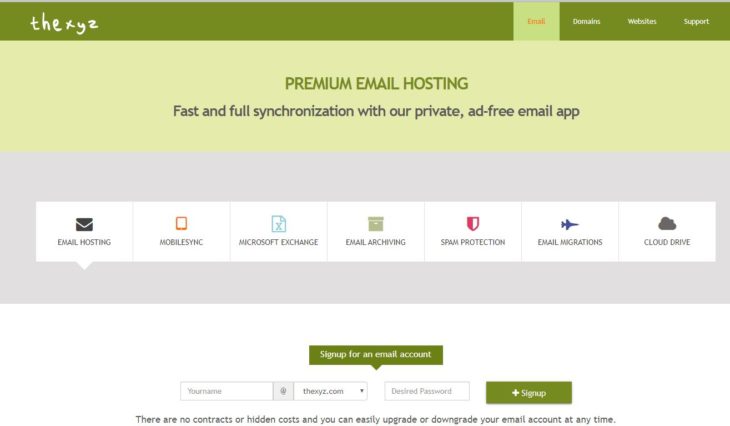
Thexyz is recognized as a premium email service provider, particularly appealing for its strong focus on privacy and security. It’s well-suited for business users and those willing to invest in a secure email solution. Here’s why Thexyz stands out:
Large Mailbox Storage: Thexyz offers a substantial 25GB mailbox storage, which is ample space for most business and personal users, ensuring that storage limitations don’t hinder email management.
Advanced Security Protocols: The service includes DMARC, DKIM, and SPF protection, which are critical for securing email communications against phishing, spoofing, and spam.
Effective Spam and Virus Protection: Thexyz provides robust spam and virus protection, safeguarding users from malicious content and unwanted emails.
Two-Factor Authentication (2FA): The inclusion of 2FA adds an extra layer of security to user accounts, protecting against unauthorized access.
Full Email Encryption: Emails are fully encrypted, ensuring privacy and security, especially important for sensitive business communications.
Cloud-Based Email Import Tool: Thexyz features a cloud-based tool that can import emails from almost any provider, offering support for IMAP. This is particularly useful for users looking to consolidate their email communications into one secure platform.
Pricing: With a monthly fee of $2.95 or an annual option of $29.95, Thexyz’s pricing is competitive, especially considering the array of features and security measures offered.
Privacy Focus: Being privacy-centric, Thexyz is an excellent choice for users who prioritize the confidentiality and security of their email communications.
However, there are some considerations:
No Free Plan: Thexyz doesn’t offer a free plan, which might be a barrier for users looking for a no-cost email solution.
Location in a 5 Eyes Country: Being based in Canada, a member of the Five Eyes intelligence alliance, might raise concerns for users wary of government surveillance and data requests.
In conclusion, Thexyz is a strong recommendation for those in need of a secure, privacy-focused email service with ample storage and advanced security features, particularly for business-oriented use. Its competitive pricing and robust protection mechanisms make it an appealing option. However, the lack of a free plan and its location in a 5 Eyes country are factors to consider based on individual privacy preferences and requirements.
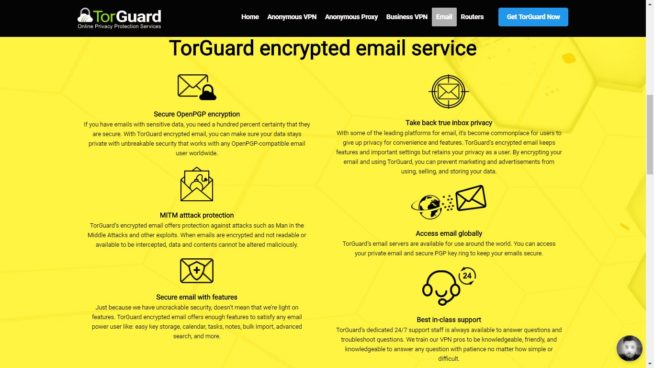
TorGuard stands out as a highly secure email service provider, especially appealing to users who prioritize ultimate security and privacy in their email communications. Here’s why TorGuard is a good choice:
Strong Association with a Reputed VPN Provider: TorGuard’s connection with a well-known VPN provider adds a layer of trust and credibility, especially in terms of security and privacy.
High-Level Email Protection: The service offers server-side PGP (Pretty Good Privacy) protection, which is highly reliable for securing email content.
Strict No-Logs Policy: TorGuard promises not to keep any logs about email usage, which is a crucial feature for users concerned about privacy and anonymity.
Immediate and Permanent Deletion of Content: The service ensures that all content, including emails and account information, is deleted immediately and forever upon unsubscribing or deleting. This includes no trash bin for messages, ensuring complete erasure of data.
Resistant to Government and Third-Party Sharing: TorGuard states that they do not share user information with the government or third-party agencies, except in cases of receiving a court order. This commitment to user privacy is significant for those wary of government surveillance.
Location Advantage: Having server facilities located in Ukraine may offer some jurisdictional benefits in terms of privacy and data protection laws.
VPN Service Integration: The provision of a VPN service along with the email adds an extra layer of security, especially useful for users who need comprehensive digital privacy solutions.
Pricing Options: TorGuard offers a free plan with some limitations, and affordable paid options starting at $6.95 monthly, making it accessible to a wide range of users.
Ultimate Security Protocols: The combination of PGP protection, a no-logs policy, and secure server location makes TorGuard one of the most secure email providers available.
However, there are some drawbacks:
Limited Cloud Storage: TorGuard does not offer cloud storage, which might be a limitation for users needing significant storage space for emails.
Limited Email Storage: The service provides very little email storage, which may not be sufficient for users with high email volume.
No Data Recovery: The immediate and permanent deletion of data means there is no possibility of recovering important emails or account information once deleted.
In summary, TorGuard is highly recommended for users who require the highest level of email security and privacy, especially those who also need VPN services. Its stringent privacy protocols and server location make it a strong contender in the secure email space. However, the limitations in terms of storage and lack of data recovery should be carefully considered, especially by users who require more flexibility in these areas.
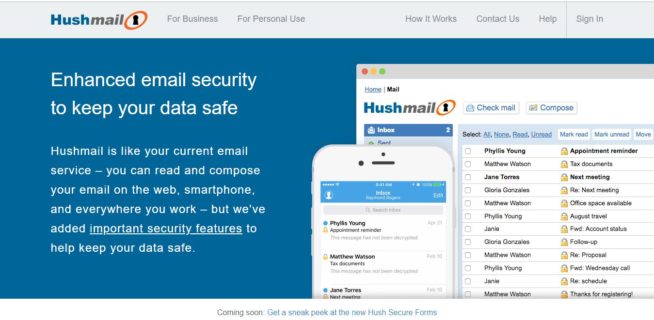
Hushmail is recognized as a highly secure email provider, offering advanced encryption protocols and a range of features beneficial for maintaining private and secure email communications. Here’s why Hushmail is a good choice:
Advanced Encryption Protocols: Hushmail uses sophisticated encryption technologies to ensure that email messages are private and secure. This is crucial for users who handle sensitive information.
Cross-Platform Encrypted Messaging: One of Hushmail’s standout features is the ability to send encrypted messages to users on other platforms, including Yahoo, Gmail, and Outlook. This flexibility is significant for maintaining security across different email services.
User-Friendly Web Interface: The web version of Hushmail has a unique and user-friendly interface for sending and receiving encrypted emails, enhancing the overall user experience.
Easy Account Setup with Multiple Domains: Users can quickly create an email address with Hushmail, and there are several domain options available, including @hush.com, @hushmail.me, and @hush.ai.
Two-Step Verification and Remote Access: The service includes two-step verification for added security and supports remote access via IMAP and POP protocols.
Comprehensive Email Features: Hushmail offers a desktop client, mobile apps for iOS and Android, the ability to import contacts via a CSV file, email signature support, 10GB of email cloud storage, an advanced spam filter, and various email settings, including auto-response.
Generous Storage Limits: The platform provides a decent 10GB of mailbox storage in the premium plan and allows sending files up to 20MB per file, with a total of 50MB per email.
Server Location in Canada: Hushmail’s servers are located in Canada, which may offer certain jurisdictional privacy benefits.
Pricing and Trial Period: A free 14-day trial is available, after which the premium subscription costs $49.98 per year, making it a relatively affordable option for secure email services.
Ease of Use: Hushmail is simple to use and doesn’t require any additional software or complex crypto key management, making it suitable for traveling users.
However, there are some limitations:
Lack of Strong Password Enforcement: The system does not enforce the use of strong passwords, which could potentially compromise account security.
Platform Availability: Hushmail is not available on Mac OS, limiting its usability for Mac users.
Browser Compatibility: The service works only on the newest browsers with the latest updates, which might be a limitation for users with older or less common browsers.
In summary, Hushmail is an excellent option for users seeking a secure and user-friendly email service with advanced encryption capabilities. Its ability to send encrypted emails to users on other platforms and its range of features make it a strong contender. However, potential users should consider the limitations regarding password security, platform availability, and browser compatibility.
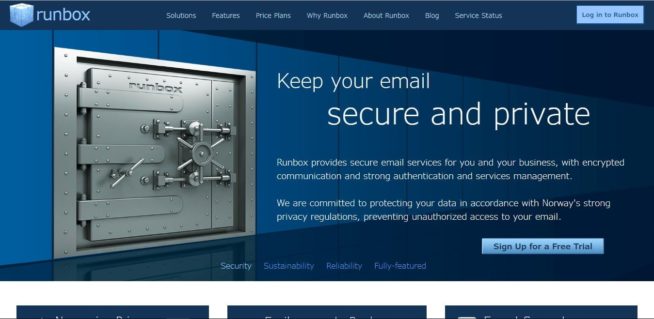
Runbox is recognized as a reliable and secure email service provider, offering a range of features that cater to users who prioritize privacy and data protection. Here’s why it’s a good choice:
Encrypted Connection for Message Delivery: Runbox uses an encrypted connection to send messages through its servers, ensuring that email communications are secure and private.
Protection Against Data Leaks and Theft: The service provides robust security measures to protect users against data leaks and theft, which is crucial for handling sensitive information.
Server Location Benefiting from Strong Privacy Laws: The servers being located in Norway is a significant advantage, as the country is known for its strong privacy laws. This adds an extra layer of legal protection to user data.
Bitcoin Payment Option for Anonymity: The ability to use Bitcoin for payment offers an additional option for users seeking anonymity in their transactions.
Two-Factor Authentication: Runbox employs two-factor authentication (2FA) for enhanced security, adding an extra layer of protection against unauthorized access.
No External Tracking Cookies: The absence of external tracking cookies enhances the privacy of the user account, making it more secure against potential hacking attempts.
Versatile Email Management Features: The service includes features for creating email nicknames, managing large volumes of data, professional email management tools like filtering, customized sorting, forwarding, and integrated services.
Spam and Virus Filtering: Runbox provides effective spam and virus filtering, keeping your inbox clean and secure.
Substantial Cloud Storage: With 10GB of mailbox storage and a 100MB maximum attached file limit, the service offers ample storage for most users.
Universal Access: The platform supports access via Web, IMAP, WAP, etc., ensuring you can access your email from various devices and platforms.
30-Day Free Trial and 60-Day Money-Back Guarantee: Runbox offers a 30-day free trial and a generous 60-day money-back guarantee, giving users ample time to assess the service.
However, there are some drawbacks:
Higher Pricing for Business Subscriptions: The pricing for business subscriptions can be relatively high, which might be a barrier for small businesses or startups.
Lack of Mobile Applications: The absence of dedicated mobile applications may limit the convenience for users who rely heavily on mobile devices for email access.
In conclusion, Runbox is a strong recommendation for users seeking a secure email service with robust privacy protections, particularly beneficial for those who value the legal privacy safeguards provided by Norway. Its comprehensive set of features, combined with the option for anonymous payment and strong anti-leak measures, make it a compelling option. However, the higher cost for business plans and lack of mobile apps should be considered in the decision-making process.
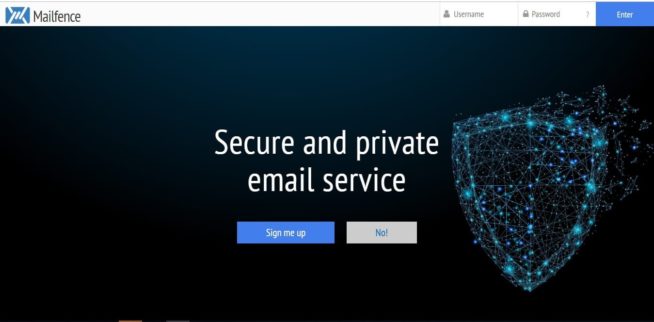
Mailfence is a secure email service provider known for its OpenPGP-based end-to-end encryption platform. Established in 2013, it offers a range of features conducive to maintaining private and secure email communications. Here’s why it’s a good choice:
End-to-End Encryption: Mailfence uses end-to-end encryption based on OpenPGP, providing a high level of security for email content. This ensures that messages are readable only by the intended recipients.
Cross-Platform Encrypted Emailing: Unlike many competitors, Mailfence allows sending encrypted emails to users of any other email service. This feature significantly enhances communication security beyond the Mailfence user base.
Two-Factor Authentication Support: The inclusion of two-factor authentication adds an extra layer of security to user accounts, protecting against unauthorized access.
Digital Email Signature: The service provides a digital email signature feature, which is vital for verifying the authenticity of emails and protecting against forgery.
Ad-Free Service: Mailfence offers an ad-free experience, enhancing user privacy and the overall usability of the service.
Variety of Email Configuration Options: Users have access to a range of email configuration options, allowing for a personalized and efficient email management experience.
Advanced Spam Filter: The platform’s advanced spam filter keeps unwanted emails at bay, ensuring a cleaner inbox.
Additional Communication Features: Mailfence includes text messaging and fax options as part of its paid plans, providing more versatility in communication.
Import Contacts and Cloud Storage: Users can import contacts from various services (like Gmail, Outlook) and enjoy document cloud storage and a calendar, making Mailfence a comprehensive communication tool.
Server Location in Belgium: The servers being located in Belgium, a country known for its strong privacy laws, adds an extra layer of legal protection to user data.
Flexible Storage Options and Pricing: Mailfence offers plans with varying storage limits, catering to different user needs, and has a free plan with some limitations for those starting out.
Mobile App Availability: The availability of a mobile app enhances accessibility and convenience for users.
However, there are some limitations:
Limited Cloud Storage in Free Plan: The free plan comes with limited cloud storage, which might be insufficient for users with higher storage needs.
Size Limitations on Attachments: The free plan has a max attached file size limit of 10MB, which might be restrictive for users needing to send larger files.
In summary, Mailfence is a strong recommendation for those seeking a secure and privacy-focused email service with a range of useful features. Its end-to-end encryption, variety of configurations, and server location in Belgium make it a compelling option for users concerned about email security. However, the limitations in cloud storage and attachment size in the free plan should be considered.
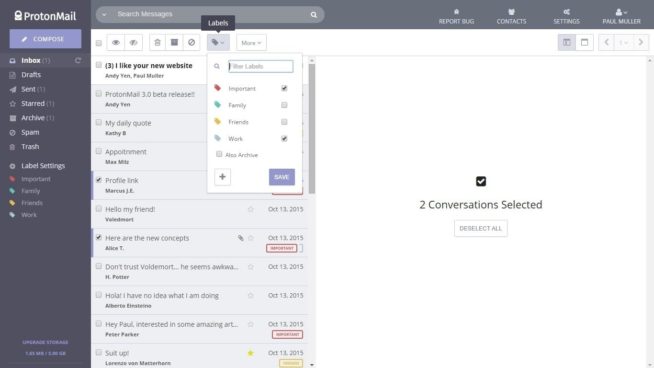
ProtonMail is highly regarded as one of the most secure email providers available, favored by security experts for its strong privacy features and user-friendly interface. Here’s why it’s an excellent choice:
End-to-End Encryption: ProtonMail provides end-to-end encryption by default for all messages, ensuring that emails are readable only by the sender and the intended recipient. This level of encryption is vital for protecting sensitive information.
Cross-Platform Encrypted Messaging: The service allows users to send encrypted messages to recipients on any email platform, enhancing the security of communications beyond the ProtonMail user base.
Self-Destructive Messages: ProtonMail offers the option to send self-destructive messages, where users can set a time period after which the message will automatically be deleted. This feature is particularly useful for sending sensitive information that should not be stored long-term.
User-Friendly Web Interface and Mobile Apps: The service boasts a convenient web interface with numerous features, making it easy to use for those familiar with other email providers like Gmail or Outlook. Additionally, ProtonMail offers mobile apps for Android and iOS.
Open-Source Platform: Being an open-source platform, ProtonMail allows for greater transparency and trust, as the community can review and contribute to the source code.
Server Location in Switzerland: The servers being located in Switzerland, a country known for its strict privacy laws, adds an extra layer of legal protection to user data.
Free and Paid Plan Options: ProtonMail offers a free plan without ads, making it accessible to everyone. Paid plans, ranging from €48 to €288 per year, provide additional features and larger storage capacities.
Generous Storage and Attachment Limits: The service provides 500 MB of mailbox storage in the free plan and 5 to 20 GB in the paid plans, with a max attachment size of 25 MB.
However, there are some drawbacks:
Expensive Visionary Plan: The highest-tier plan, Visionary, can be quite expensive, potentially limiting its accessibility for individual users or small organizations.
Limited Cloud Storage in Free Plan: While the free plan offers several features, the cloud storage is limited to 500 MB, which may be insufficient for users with higher storage needs.
In summary, ProtonMail is highly recommended for users who prioritize email security and privacy. Its end-to-end encryption, user-friendly interface, and server location make it a top choice among secure email providers. The availability of both free and paid plans caters to a wide range of users, although the cost of the higher-tier plans and limited storage in the free plan should be considered.
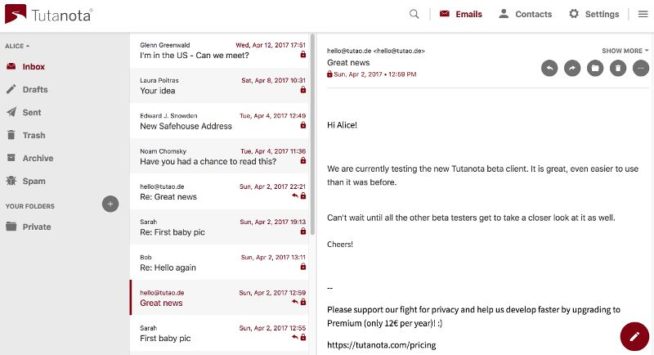
Tutanota is a well-regarded secure email provider known for its robust protection and open-source platform. It offers a range of features suitable for individuals and businesses concerned about email security and privacy. Here’s why Tutanota is a good choice:
Highly Secure Email Messaging: Tutanota provides strong email protection using the latest security protocols. It employs a proprietary security protocol based on AES and RSA encryptions, ensuring high levels of data security.
Open-Source Platform: Being open-source means that the Tutanota system can be continuously reviewed and improved by a community of developers, enhancing its security and reliability over time.
Flexible Pricing Options: Tutanota offers a free plan with essential features and a very affordable premium plan at €12/year, which includes additional features and more flexible configurations.
Web-Based Service Accessible in Modern Browsers: The service works in any modern web browser, offering universal access without the need for specialized software.
No Daily Message Limit: There is no limit to the number of messages you can send per day, even on the free plan, which is beneficial for frequent email users.
Custom Domain in Premium Plan: The premium plan allows the use of a custom domain, which is valuable for businesses and professionals seeking a more branded email experience.
Server Location in Germany: Tutanota’s servers are located in Germany, a country known for strong privacy laws, which adds an extra layer of legal protection for user data.
Ad-Free Service: Both the free and paid plans are ad-free, enhancing user experience and privacy.
Storage Capacity: The service offers 1GB of email storage and allows attachments up to 25MB, which is adequate for basic email needs.
However, there are some limitations:
Outdated Mobile App Design: Some users find the mobile app design outdated, which might affect the user experience on mobile devices.
AES-128 Encryption Only: While AES-128 encryption is strong, it is not the highest standard (AES-256), which might be a concern for users requiring the highest level of encryption.
Limited Storage Space: The storage space, particularly in the free plan, may be somewhat small for users with high email storage needs.
In summary, Tutanota is highly recommended for users looking for a secure, privacy-focused, and affordable email service. Its open-source nature, strong encryption protocols, and server location in Germany make it a trustworthy choice. However, users should consider the potential limitations regarding mobile app design, encryption standards, and storage space.
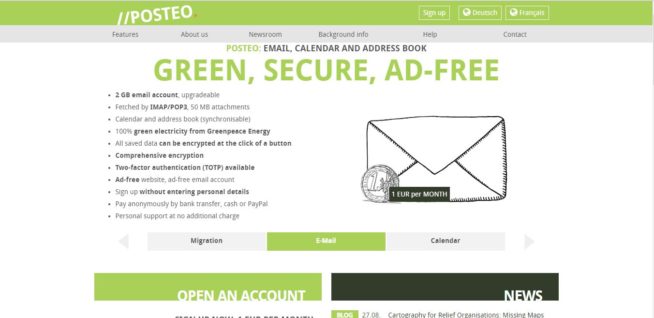
Posteo.de is recognized as a secure and environmentally conscious email service provider, offering a range of features that cater to users who prioritize online privacy and sustainability. Here’s why it’s a good choice:
Mid-Level Protection and Security: Posteo provides a solid level of protection and security for email communications, suitable for users who require a balanced approach to email privacy.
Integrated Calendar and Address Book: The platform includes a calendar and address book, which are synchronized, adding convenience for users who need an integrated solution for their scheduling and contact management.
Community Support and Ad-Free Service: Posteo relies on community support and is completely ad-free, both in the email service and on the website. This enhances the user experience and ensures privacy.
Two-Factor Authentication (TOTP): The inclusion of TOTP two-factor authentication adds an extra layer of security against unauthorized access to user accounts.
Remote Access via IMAP/POP3: Posteo supports remote access through IMAP/POP3, making it flexible and accessible from various email clients.
Reliable Data Encryption: The service uses reliable data encryption to secure email content, although it does not provide end-to-end encryption.
Ease of Registration and Payment Options: The platform offers an easy registration process and a wide range of payment options, making it accessible and user-friendly.
Affordable Pricing with Additional Storage Options: Posteo’s pricing is very affordable at €1 per month, with the option to purchase additional storage at a reasonable cost.
Environmentally Friendly Platform: The service is known for being eco-friendly, which is appealing to environmentally conscious users.
Server Location in Germany: The servers being located in Germany, a country with strong privacy laws, adds an additional layer of legal protection for user data.
However, there are some limitations:
Lack of End-to-End Encryption: Unlike some competitors, Posteo does not offer end-to-end encryption, which might be a concern for users requiring the highest level of email security.
Comparatively Lower Security Level: While Posteo provides a good level of security, it may not be as high as that offered by other top-tier secure email providers.
In summary, Posteo.de is recommended for users looking for an affordable, secure, and environmentally friendly email service with integrated calendar and address book features. Its commitment to privacy, sustainability, and user-friendly approach makes it a strong choice. However, users requiring the highest level of security, such as end-to-end encryption, might need to consider other options.
Kolab Now stands out as a secure and functional email platform, particularly suited for corporate users, small and medium businesses, and those who prioritize data protection under stringent privacy laws. Here’s why Kolab Now is a good choice:
Open-Source Encrypted Email Platform: As an open-source platform, Kolab Now offers transparency and the potential for continuous improvement by its user and developer community.
Focus on Business Users: The service is tailored to the needs of the corporate sector, particularly small and medium businesses, offering a suite of tools that cater to professional requirements.
Swiss Server Location: The servers being located in Switzerland is a significant advantage, as the country is known for its strong privacy laws and data protection regulations. This ensures a high level of legal protection for stored data.
Data Protection from Government Intrusion: Kolab Now assures users that their data is protected from government access, which is crucial for businesses and individuals concerned about privacy and confidentiality.
Built-in Productivity Tools: The service includes built-in applications for taking notes, responsive email support, calendars, contacts, and shared folders, making it a comprehensive solution for business productivity.
Flexible Pricing Plans: Kolab Now offers individual accounts starting from CHF 4.41 and group accounts from CHF 5.38, providing options for different types of users and businesses.
Strong Legislative Protection in Switzerland: The Swiss location offers some of the highest legislative protections for data, enhancing the security and privacy of the service.
Range of Business Tools: The full range of business tools integrated into Kolab Now makes it a versatile platform for professional use.
However, there are some drawbacks:
Productivity Focus Over Encryption: Kolab Now is more of a productivity app than a dedicated encrypted email platform. While it offers secure email services, its primary focus is not on end-to-end email encryption.
Regularly Increasing Prices: The increasing prices might be a concern for budget-conscious businesses and individuals.
In summary, Kolab Now is recommended for businesses and professionals looking for a secure email service with a strong emphasis on productivity tools, located in a jurisdiction with robust data protection laws. Its Swiss server location and comprehensive business features make it an appealing choice. However, those prioritizing end-to-end encryption as a primary feature may need to look for alternative platforms, and the increasing cost should be considered in budget planning.
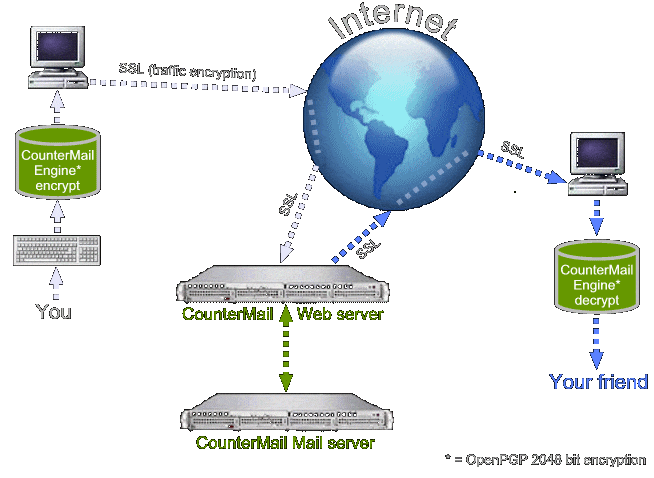
CounterMail stands out as a secure email service provider, particularly favored for its robust encryption and privacy-focused features. Here’s why it’s a good choice:
OpenPGP Protocol with Strong Encryption: CounterMail uses the OpenPGP protocol with 2048-bit encryption, providing end-to-end encryption between users. This ensures that emails are readable only by the sender and the intended recipient, offering a high level of security for sensitive communications.
End-to-End Encryption for Secure Correspondence: The platform’s commitment to end-to-end encryption means that your emails are protected from unauthorized access, making your correspondence highly secure.
Remote Access via IMAP: CounterMail supports remote access through IMAP, allowing flexibility in accessing emails from various email clients.
Wide Range of Configurations: The service offers a variety of configurations, enabling users to customize their email experience according to their preferences and security needs.
No Personal Data Tracking: CounterMail does not track any personal data, which is a significant advantage for users concerned about privacy and data collection.
Advanced Password Protection: The inclusion of a password manager for high-level password protection further secures user accounts against potential breaches.
Anonymous Email Headers and Filters: The service provides anonymous email headers and email filters, enhancing user anonymity and managing incoming emails effectively.
Cross-Device Availability: CounterMail is available on almost any device, ensuring ease of access regardless of the user’s preferred technology.
Server Location in Sweden: The servers being located in Sweden, a country known for strong privacy laws, adds an extra layer of legal protection for user data.
Optional USB Key for Additional Security: The option to use a USB key as a hard drive offers an additional layer of security, making it more difficult for unauthorized users to access the account.
However, there are some limitations:
Outdated Website Interface: Some users may find the website interface outdated, which could affect the user experience.
Limited Free Plan: The free plan is limited to only 7 days, which may not be sufficient for users to fully evaluate the service.
Basic Storage Limitation: The basic storage offered is 250 megabytes, which might be insufficient for users with higher storage needs. Additional disk space is available but at an extra cost.
In summary, CounterMail is recommended for users who prioritize email security and privacy, particularly those who require robust end-to-end encryption. Its strong encryption protocols, privacy-focused features, and cross-device availability make it a strong contender in the secure email space. However, users should consider the platform’s interface, limited free plan duration, and basic storage limitations in their decision-making process.
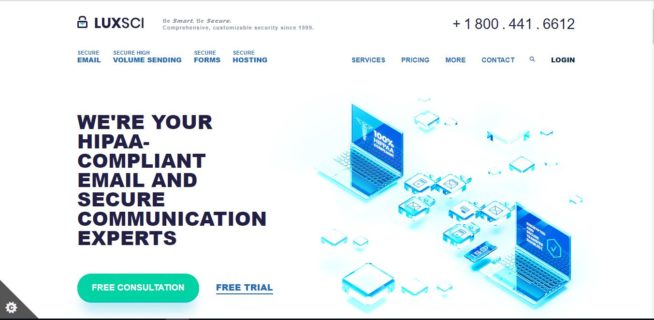
LuxSci is a secure email service provider based in the USA, known for its focus on individual and business users, offering a comprehensive range of services to ensure protected email communication. Here’s why LuxSci is a good choice:
PGP and S/MIME Technologies: LuxSci employs PGP (Pretty Good Privacy) and S/MIME (Secure/Multipurpose Internet Mail Extensions) technologies, providing robust end-to-end encryption for email communications.
End-to-End Encryption for All Users: The service ensures end-to-end encryption for every user, making it nearly impossible for unauthorized parties to access the content of the emails.
TLS-Only Email Forwarding: The Secure TLS-Only Email Forwarding feature enhances the security of email transmission, ensuring that emails are sent over secure connections.
Highly Protected Logins: LuxSci emphasizes secure login processes, protecting user accounts from unauthorized access and potential breaches.
Range of Security Technologies and Protocols: The service incorporates a variety of security technologies and protocols, demonstrating a comprehensive approach to email security.
Large Attachment Size and Generous Storage: LuxSci allows attached file sizes of up to 200MB and offers storage ranging from 1GB to 50GB, depending on the pricing plan. This is beneficial for users with extensive storage and attachment needs.
Server Location in the USA: The servers being located in the USA might be advantageous for users who prefer US-based services and are comfortable with the country’s legislation regarding data privacy.
Diverse Pricing Plans: LuxSci provides a wide range of pricing plans starting at $10 monthly, catering to different user requirements, especially within the corporate sector.
However, there are some limitations:
Pricing Not Attractive for Personal Users: The service may be too expensive for personal users, especially when compared to other providers that offer more affordable plans.
Concerns with US Legislation: For some users, the USA-based servers may not be a preferable option due to concerns about US legislation and government surveillance capabilities.
In summary, LuxSci is recommended for business users and individuals who require high-level email security and are willing to invest in a premium service. Its use of advanced encryption technologies, secure login processes, and generous storage options make it a strong contender in the secure email space. However, the cost factor and the location of its servers in the USA should be considered, especially by personal users and those wary of US data privacy laws.
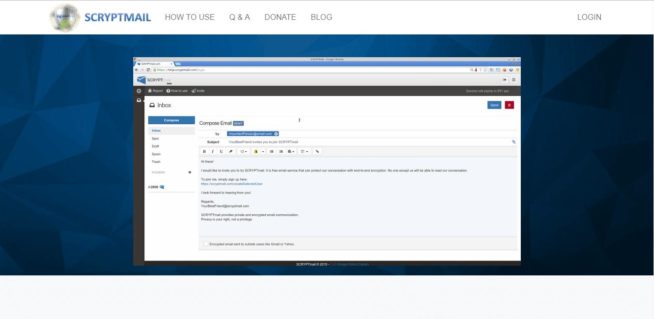
SCRYPTmail is recognized as a secure and anonymous email service provider, focusing on user privacy and robust encryption. Here’s why it’s a good choice:
Strong Focus on User Privacy: SCRYPTmail emphasizes user privacy, ensuring that all messages are encrypted in such a way that not even the developers can access them. This level of confidentiality is crucial for users who handle sensitive information.
Reliable Encryption Protocols: The service uses highly reliable encoding and encrypts not only the content of the emails but also the metadata. This adds an extra layer of security, protecting the identities of those involved in email conversations.
Protection Against Data Leaks: In the event of a database compromise, the encryption of email metadata prevents hackers from understanding the context or participants of the email conversations, significantly reducing the risk of data leaks.
Two-Factor Authorization: The inclusion of two-factor authorization (2FA) enhances account security, making unauthorized access much more difficult.
Key Exchange via PGP Standard: SCRYPTmail facilitates key exchange using the PGP (Pretty Good Privacy) standard, which is known for its robustness in secure communications.
Client-Side Encryption: The service employs client-side encryption, meaning that data is encrypted on the user’s device before being sent, adding an extra security layer.
Secure Password Management: Passwords are encrypted in ANSI, and while the system does not store passwords, it allows users to reset them if necessary.
Secure HTTPS Connection: SCRYPTmail uses an HTTPS connection with a signed certificate, ensuring secure communication between the user’s device and the service.
Accessible Pricing Plans: The service offers affordable plans at $2 or $15 per month, following a 7-day free trial, making it accessible to a wide range of users.
Availability via TOR Protocol: Users can access SCRYPTmail via the TOR protocol, providing an additional option for those seeking enhanced anonymity.
However, there are some limitations:
Ongoing Development: The service is still in the development stage, which may mean occasional changes or updates that could affect user experience.
Web Version Only: Currently, SCRYPTmail only offers a web version without dedicated mobile applications, which may limit accessibility for users who primarily use mobile devices for email.
Server Location in the USA: For some users, the fact that SCRYPTmail’s servers are located in the USA might be a concern due to the country’s legislation and surveillance practices.
In summary, SCRYPTmail is recommended for users looking for an affordable, privacy-focused email service with strong encryption features. Its commitment to user privacy, robust encryption protocols, and affordable pricing make it a strong contender. However, its ongoing development status and the lack of mobile apps should be considered, especially by users who prioritize stability and mobile accessibility.
2. Winner
In our opinion, the best solution for most users is Protonmail. Here’s why:
Flexible pricing plans.
End-to-end encryption.
Great mobile applications.
Service based in Switzerland.
Very popular service overall.
They really care about your privacy and you should give them a try. They also have a free plan you can use to test their service!
Marcus is a cybersecurity analyst with a focus on VPN and proxy services. As the founder and driving force behind a prominent VPN and proxy website, Private Proxy Guide, Marcus has emerged as a trusted authority in the digital realm. With a passion for staying ahead of evolving cyber threats, he has played a pivotal role in educating and empowering individuals and businesses to safeguard their online presence.