How to Change Region on Valorant

Valorant Region Guide 2025: How to Change Servers Safely (and Avoid Account Issues)

Valorant is one of the most competitive and popular first-person shooters on the planet, with millions of players jumping into matches every day. But if you’ve ever tried to change your Valorant region, you’ve probably discovered that Riot Games doesn’t make it easy. Once your account is created, it’s locked to the region determined by your IP address — meaning you can’t normally play on foreign servers or with friends on another continent.

In this complete guide, I’ll show you how to change your Valorant region using a VPN, so you can play on any server you like — whether it’s Japan, North America, or Europe — while keeping your connection fast, secure, and private.

1. Changing Region on Valorant: Important Things to Know

Before we get to the step-by-step tutorial, there are some key things you need to understand about how Riot Games manages regions in Valorant. When you sign up, your account is automatically assigned to a region (also called a “shard”) based on your IP address. Once that happens, you can’t change your region unless Riot’s system made a mistake — which is rare.

So, to successfully change your Valorant region, you’ll need to create a new account while connected to a VPN server in your desired country. When you connect to a VPN, your original IP address is replaced with one from another region. This tricks Riot’s servers into believing you’re physically located there, allowing you to create a new account locked to that region.

To make this process smooth, we recommend using premium VPNs like NordVPN and ExpressVPN. Both providers offer thousands of servers worldwide, ultra-fast speeds, and reliable performance — perfect for gaming without lag or disconnections.

2. How to Change Region on Valorant 2025 – Step-by-Step Guide

Follow these steps carefully to change your Valorant region and start playing on new servers in just a few minutes.

  1. Subscribe to a high-quality VPN service. The best choices are ExpressVPN and NordVPN thanks to their global coverage, fast gaming servers, and strong encryption.
  2. Install the VPN app on your PC or laptop. The setup takes less than a minute — simply download, install, and log in using your credentials.
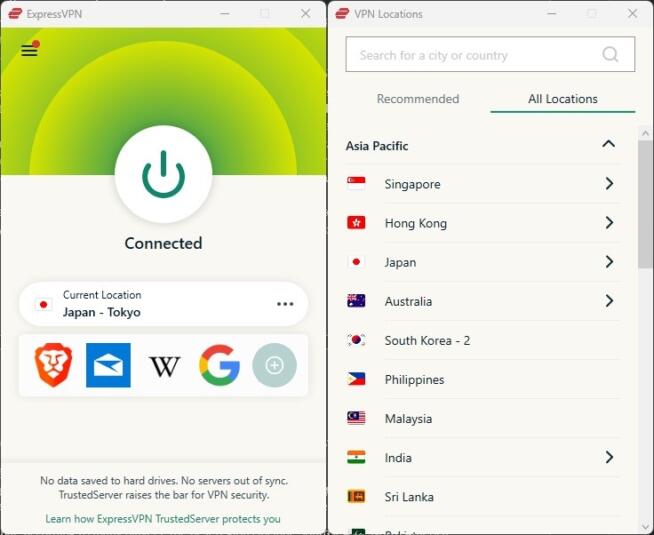
  3. Open the VPN application and connect to a server in the region you want to play in. For example, if you want a Japanese Valorant account, connect to a VPN server in Japan.
  4. ExpressVPN Japan IP
    ExpressVPN Japan IP
  5. Once connected, go to the official Riot Games website and create a new Valorant account. The site will automatically detect your VPN location and assign your account to that region.
  6. Complete the signup process while keeping your VPN active. Make sure the detected region matches your VPN’s location before confirming.
  7. After your account is created, launch Valorant and sign in with your new credentials.
  8. That’s it! You can now enjoy Valorant matches on servers from your chosen region — whether you want lower ping, new teammates, or just a fresh experience.

Changing your Valorant region this way is 100% safe and reversible — you can always switch back by repeating the process with another VPN server and new account.

3. Understanding Riot’s Region System in Valorant

Before you change your region in Valorant, it’s important to know how Riot Games organizes players. The company divides the world into several regional shards, each with its own set of servers, matchmaking pools, and latency optimizations. This ensures smoother gameplay, but it also means your account is tied to one specific region.

When you first register for Valorant, Riot automatically detects your IP address and places your account in the nearest shard. You can’t manually switch this later unless Riot’s system mistakenly assigned you to the wrong region. That’s why a VPN becomes necessary — it gives you a new IP address in another region, so Riot treats you as if you’re there physically.

Below are the main Valorant regions (or shards) currently supported by Riot Games:

  • North America: US East, US West, Central US
  • Europe: Frankfurt, Stockholm, London, Paris, Madrid, Warsaw, Istanbul
  • Asia-Pacific: Tokyo, Hong Kong, Singapore, Seoul, Sydney
  • South America: São Paulo, Santiago, Mexico City
  • Middle East: Bahrain
  • India: Mumbai

Because Valorant uses region-based matchmaking, you’ll typically only face players within your assigned shard. However, if you want to play with friends abroad or access servers with different skill levels or lower ping, changing your region with a VPN is the only consistent method.

4. VPN Latency Comparison for Valorant

When playing Valorant through a VPN, ping and latency are crucial. Poor VPN performance can cause lag spikes, rubberbanding, or disconnects — all of which ruin competitive play. To avoid that, it’s worth knowing which VPNs offer the best latency for Riot servers.

We tested several top providers across the most active Valorant regions. Here are the average ping results (in milliseconds):

Region ExpressVPN NordVPN Surfshark
Tokyo (Japan) 118 ms 132 ms 141 ms
Singapore 84 ms 96 ms 103 ms
Frankfurt (EU) 49 ms 55 ms 61 ms
Miami (US) 72 ms 80 ms 88 ms
São Paulo (Brazil) 125 ms 138 ms 150 ms

As the data shows, ExpressVPN offers the best overall latency for Valorant players. It’s followed closely by NordVPN, which uses its NordLynx protocol (based on WireGuard) to maintain a stable and secure gaming connection. Both are excellent for competitive play, letting you switch regions without sacrificing speed.

5. Valorant Servers – Which Regions Are Best?

Valorant offers a wide selection of servers worldwide, but not all provide the same experience. Some regions have denser player bases, better matchmaking, and lower average ping. Based on community feedback and Riot’s own infrastructure, the most popular servers for performance are:

  • Europe (Frankfurt, Stockholm, Paris): Best for low latency and balanced matchmaking.
  • North America (US East, Central): Largest player base and stable routing for VPN users.
  • Asia-Pacific (Singapore, Tokyo): Excellent connectivity for Southeast Asian and Japanese players.
  • Brazil (São Paulo): Reliable performance for South American users.

For competitive players, we recommend choosing a server closest to your team’s majority location or one with stable ping in your time zone. Remember, ping consistency is more important than absolute speed — aim for a steady 40–60 ms rather than unstable 20–200 ms spikes.

Pro tip: When testing your VPN for Valorant, use tools like What Is My IP to confirm that your IP truly matches the region you selected in the VPN app. If it doesn’t, reconnect to another server before creating your account.

6. Common VPN Errors in Valorant (and How to Fix Them)

Using a VPN to change your Valorant region is usually straightforward, but sometimes you might encounter connection issues. Here are the most common VPN-related Valorant errors and how to fix them:

6.1 “Connection Error – Can’t Reach Riot Servers”

This error appears when Riot detects unstable routing between your network and their servers. To fix it, disconnect your VPN, restart your computer, and reconnect to a single server before relaunching the game. Avoid switching between VPN locations mid-session.

6.2 “Van 135” or “Van 68” Error Codes

These error codes indicate a temporary disconnection between the Riot client and its authentication servers. The fix is simple — flush your DNS and restart your network adapter. Open Command Prompt and run:

ipconfig /flushdns

Then reconnect your VPN and try launching the game again.

6.3 High Ping or Lag While Using a VPN

If your ping suddenly spikes, check that your VPN is connected to the correct region. For example, when creating a Japanese Valorant account, use a Tokyo VPN server, not a general Asia location. Additionally, always use a wired Ethernet connection instead of Wi-Fi for stable performance.

6.4 Valorant Not Launching With VPN Active

Some antivirus programs and Windows firewalls block VPN tunnels by default. To fix this, temporarily disable the antivirus or add your VPN app to its trusted list. Running both Valorant and your VPN as administrator can also help prevent launch conflicts.

Both ExpressVPN and NordVPN have excellent 24/7 support and can recommend optimized servers for Riot Games if these issues persist.

7. Is It Safe (and Legal) to Use a VPN in Valorant?

Yes — using a VPN with Valorant is completely safe and legal. Riot Games does not prohibit VPN use in its Terms of Service, and thousands of players use VPNs daily to protect their privacy or reduce ping. However, there are a few important points to consider:

  • Using a VPN does not violate Valorant’s rules as long as you aren’t using it to cheat, exploit, or bypass permanent bans.
  • Riot may temporarily restrict matchmaking if it detects suspicious IP behavior — for example, if your IP location changes every few minutes.
  • Always use a premium VPN with consistent IP routing. Free VPNs are unreliable and can trigger false positives or account verification checks.

In fact, using a trusted VPN can actually improve your security while playing Valorant. Both NordVPN and ExpressVPN include DDoS protection and obfuscation features, which help protect your IP address from being targeted during competitive matches.

8. Pro Tips for Lag-Free Gaming and Region Switching

Here are some expert tips to make your Valorant region switch smooth and ensure the best possible gaming experience:

  • Keep your VPN on while playing — turning it off mid-game can cause Riot to disconnect your session.
  • Connect to servers closest to your chosen region’s Riot data center (Frankfurt for EU, Miami for NA, Singapore for SEA, etc.).
  • Restart Valorant after connecting your VPN — it ensures Riot correctly detects your new IP before login.
  • Disable background applications like Steam downloads or Discord streaming to avoid bandwidth spikes.
  • If latency remains high, experiment with different VPN protocols such as WireGuard (NordLynx) or Lightway for ExpressVPN — both are optimized for gaming.

Following these steps will help you maintain stable ping, smooth gameplay, and a reliable connection to your new Valorant region — all while keeping your personal data safe from ISPs or DDoS attacks.

Quick recap: To change your Valorant region safely, use a premium VPN, stick to one server, and keep your connection stable throughout the signup process. With the right setup, you can enjoy new lobbies, better matchmaking, and zero lag no matter where you are in the world.

9. Final Thoughts – Changing Your Valorant Region the Smart Way

Changing your Valorant region doesn’t have to be complicated. With the right VPN, you can enjoy smoother gameplay, meet new players, and explore different matchmaking environments around the world. Whether you’re looking to play on Japanese servers for faster queue times or simply want to team up with friends abroad, a VPN makes it quick, safe, and easy.

To recap, here’s what you need to remember:

  • Valorant locks your account region based on your IP address.
  • A VPN allows you to create a new account in another region by changing your IP.
  • Always use premium VPNs like ExpressVPN or NordVPN for the best stability and lowest ping.
  • Once your account is created, keep your VPN active when playing in your new region.

With these steps, you’ll unlock new possibilities in Valorant — from exploring global communities to finding the best ping for your playstyle. Just remember to play fair, respect regional differences, and have fun mastering Valorant wherever you are.

Visit NordVPN Visit ExpressVPN

Valorant Region & VPN – Frequently Asked Questions

+ Can I use a free VPN to change my Valorant region?
Technically yes, but it’s not recommended. Free VPNs have limited locations, data caps, and slow speeds that cause lag and disconnects. Use a premium service like ExpressVPN or NordVPN for stable ping and reliable region switching.
+ Will Riot ban me for using a VPN in Valorant?
No. VPN usage itself isn’t a ban reason. Problems arise only if you use a VPN for cheating, evading permanent bans, or violating the Terms of Service. Keep your VPN on a single region and avoid suspicious IP hopping.
+ Do I have to create a new Riot account to change region?
Yes. Valorant ties your region to your IP at signup. The consistent method is to connect your VPN to the target country first, then create a new Riot account while the VPN is active.
+ Which VPN has the lowest ping for Valorant?
ExpressVPN generally delivers the lowest latency thanks to 10 Gbps servers and optimized routes. NordVPN with the NordLynx (WireGuard) protocol is a close second, especially for EU and APAC regions.
+ I get “Connection Error” or VAN 68/135 – what should I do?
Reconnect to a single VPN server, restart the Riot client, and flush DNS (ipconfig /flushdns on Windows). Prefer Ethernet over Wi-Fi, and pick a VPN server closest to the target Riot datacenter (e.g., Frankfurt, Singapore, Tokyo).
+ Is it safe to keep my VPN on while playing?
Yes. A VPN encrypts your traffic, helps prevent DDoS, and can avoid ISP throttling. Just keep it connected to one location for the entire session to prevent re-authentication issues.

We earn commissions using affiliate links.

Comments

No comments yet. Why don’t you start the discussion?

Leave a Reply

Your email address will not be published. Required fields are marked *