Quick answer: The Best Mobile Proxy (3G/4G/LTE/5G) in 2024 is Smartproxy!
With most people browsing the internet on their smartphones, often from the comfort of their beds, encountering restricted websites can be frustrating.
This includes everything from CAPTCHA puzzles to outright website blocks.
Fortunately, the best mobile proxies offer a solution, allowing you to unblock any site effortlessly and browse with more freedom.
Mobile proxies work by assigning you a new IP address from a large pool, enabling you to circumvent blocks and access any site.
They also enhance internet safety and can bypass geo-restrictions.
While choosing a good mobile proxy can be challenging due to the many options available, this article will provide all the necessary information to help you find the best mobile proxies for your needs.
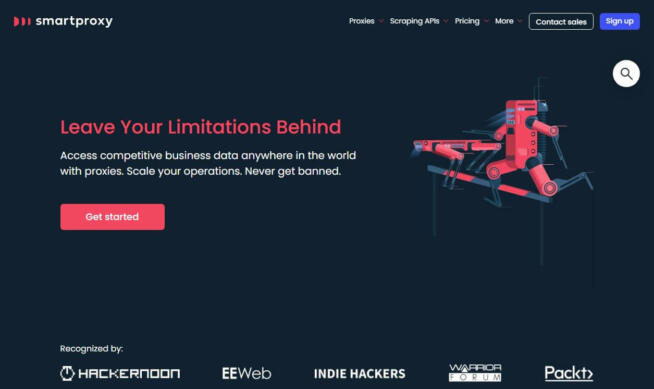
Smartproxy is a notable option in the realm of mobile proxy services, offering a wide range of features that cater to various user needs, particularly in data scraping and anonymity.
Here’s why Smartproxy might be a good choice:
Extensive Global Coverage: Smartproxy offers 3G, 4G, and 5G mobile proxies in nearly 200 countries. This extensive coverage is ideal for users needing proxies from specific locations or a diverse set of geographic IPs.
Large Pool of IP Addresses: With over 3.9 million IP addresses in the US alone, and 10 million worldwide, Smartproxy provides a vast array of options, particularly beneficial for tasks requiring numerous unique IPs, like web scraping.
City-Level Targeting and Unlimited Connections: The service allows for city-level targeting and supports unlimited concurrent connections, offering high flexibility and scalability for various applications.
Automatic IP Rotation: Smartproxy features automatic IP rotation, which is crucial for maintaining anonymity and avoiding IP bans during tasks like web scraping or ad verification.
User-Friendly Browsing Extensions: The availability of browser extensions for Chrome and Firefox enhances ease of use, making the service accessible even to less technically savvy users.
High Reliability: The 99.99% uptime guarantee ensures a reliable and consistent proxy service, which is essential for critical business operations.
Responsive Customer Support: 24/7 live chat support provides immediate assistance, adding value to the user experience.
Competitive Pricing: The pricing structure, including a pay-as-you-go option and a starter plan, is competitively priced, making it accessible to a range of users from individual researchers to small businesses.
Unique Features in X Browser App: The X Browser app helps in preventing IP bans and CAPTCHA, offering unique fingerprints for each profile, which is particularly useful for users managing multiple accounts or profiles.
However, there are some drawbacks:
Costly Advanced Plans: While Smartproxy offers affordable entry-level plans, its more advanced plans can be expensive, especially for users with high data requirements.
In summary, Smartproxy stands out as a versatile and reliable mobile proxy service with extensive global coverage, a large pool of IP addresses, and user-friendly features. Its automatic IP rotation and robust customer support make it suitable for a wide range of applications, from web scraping to anonymity tasks. While it offers fewer proxy types compared to some competitors, its focus on mobile proxies contributes to its affordability, particularly in basic plans.
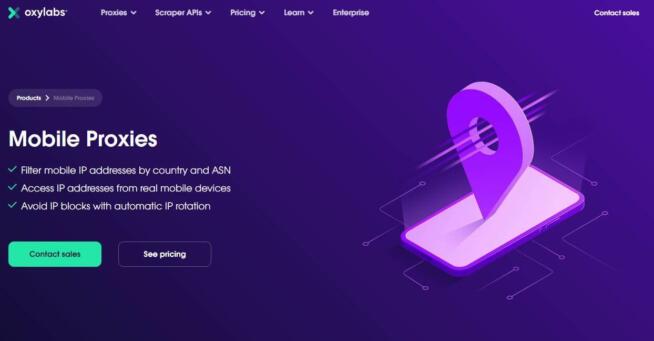
Oxylabs is recognized as a premium mobile proxy provider, offering a robust range of features suitable for various professional needs, such as web scraping, ad verification, and market research. Here’s why Oxylabs is a good choice:
Massive IP Pool: With over 20 million mobile IPs, Oxylabs provides a vast array of proxy options, ensuring users can access a diverse range of IPs for their specific requirements.
Advanced Targeting Options: The service offers country-level and ASN targeting, allowing users to select proxies based on specific geographic locations or autonomous system numbers, which is particularly beneficial for localized data scraping or content access.
High Reliability and Uptime: A 99.99% uptime guarantee ensures consistent and stable service, which is crucial for businesses relying on uninterrupted proxy access for their operations.
Effective in Overcoming IP Bans and CAPTCHA: Oxylabs’ mobile proxies are efficient in bypassing IP bans and solving CAPTCHA challenges, facilitating smooth access to websites and online data.
User-Friendly Tools and Applications: The dedicated Android app, along with tools like the Proxy Rotator and Scraper API, makes Oxylabs user-friendly and accessible, even for those new to using proxy services.
Unlimited Data Usage: Similar to Bright Data, Oxylabs offers unlimited data with its mobile proxies, providing flexibility and scalability for large-scale projects.
Efficient Scraper API Tools: The Scraper API tools utilize a vast proxy database for efficient and effective online data scraping, catering to the needs of businesses involved in data-driven decision-making.
Robust Performance for Unblocking Websites: Oxylabs excels in unblocking websites, making it an ideal choice for activities like market research, competitor analysis, and accessing geo-restricted content.
However, there are some drawbacks:
High Cost: Oxylabs’ pricing is comparable to Bright Data and can be quite expensive, particularly for smaller businesses or individual users.
Complex Pricing Structure: The pricing model can be complex, which might be challenging for users to navigate and find the most cost-effective plan for their needs.
In summary, Oxylabs is a top-tier choice for users who require a reliable, high-performance mobile proxy service with extensive geographic coverage and advanced features. Its wide range of IPs and robust tools make it suitable for complex and demanding tasks. However, the high cost and complex pricing structure may be prohibitive for some users, making it more suited for larger companies or those with specific high-end proxy needs.
IPRoyal offers high-quality mobile proxies that provide several key advantages:
Authentic Mobile IPs: IPRoyal utilizes real mobile IP addresses sourced from mobile networks, ensuring genuine user behavior to avoid detection.
High Anonymity: These mobile IPs blend seamlessly with normal traffic, providing crucial privacy for data scraping, ad verification, and managing accounts.
Precise Geo-Targeting: You can target mobile proxies down to the city level, enabling access to geo-restricted content, location-specific testing, and localized research.
Rotating IPs: Automatic IP rotation mimics typical mobile user behavior, further reducing the risk of blocking.
Broad Compatibility: Support for HTTP(S) and SOCKS5 allows use with a wide range of applications and tools.
Good Performance: IPRoyal optimizes mobile proxy speeds for time-sensitive operations like sneaker copping or quick data access.
Scalability and Flexibility: Scale from a few proxies to an enterprise-level pool, with flexible bandwidth options to match your needs.
With this combination of authenticity, anonymity, geo-targeting capabilities, and scalability, IPRoyal’s mobile proxies are well-suited for online activities requiring high privacy, reliability, and location-specific access.
Bright Data, recognized as a leader in the mobile proxy market, offers a range of advanced features suitable for a variety of professional use cases. Here’s why Bright Data (formerly Luminati) might be a good choice for those needing high-quality mobile proxies:
Extensive IP Pool: With over 7.5 million IP addresses globally, Bright Data offers one of the largest and most diverse IP pools in the industry, catering to a wide range of geographic and network needs.
Versatile IP Types: The service provides various IP types, including residential, regular, and shared IPs, making it suitable for different kinds of requests and use cases, such as web scraping, ad verification, and market research.
User-Friendly Web Interface: Bright Data operates via a web interface, which, despite its initial complexity, is straightforward once familiarized. This eliminates the need for dedicated mobile apps and is efficient even on slower devices.
High Reliability and Uptime: The 99.99% uptime guarantee ensures a reliable and stable service, crucial for businesses relying on continuous proxy access.
Support for Multiple Network Types: Compatibility with 3G, 4G, and 5G networks makes Bright Data versatile and adaptable for various mobile devices and applications.
Unlimited Data and Traffic: Offering unlimited data and traffic, the service allows for unrestricted browsing and website unblocking, ideal for data-intensive tasks.
Additional Functional Tools: Tools like Web Unlocker, Proxy Manager, and a Proxy Browser Extension for Chrome enhance the overall functionality and user experience.
Comprehensive Proxy Range: Bright Data provides a broad spectrum of proxy types, including mobile, ISP, and data center proxies, ensuring a solution for virtually any proxy requirement.
However, there are significant considerations:
High Cost: Bright Data’s pricing is on the higher side, with plans starting at $500 per month, making it a considerable investment, especially for smaller businesses or individual users.
Complex Interface for Beginners: The interface, while powerful, may initially be confusing for beginners due to its multitude of features and options.
In summary, Bright Data is a top-tier option for users who require a vast range of high-quality mobile proxies and advanced features. Its extensive IP pool and professional-grade tools make it well-suited for demanding and large-scale applications. However, its premium pricing and complex interface may not be suitable for all users, particularly those with more modest needs or budgets.
The Social Proxy is a competitive player in the mobile proxy market, particularly known for its use of real SIM cards and its extensive carrier network. Here’s why The Social Proxy might be a good choice for those in need of mobile proxies:
Wide Coverage with Real SIM Cards: Offering access to 130 mobile carriers across nearly 50 countries, The Social Proxy provides a broad range of geographic options. The use of real SIM cards, as opposed to ISPs, enhances the ability to bypass CAPTCHA and unblock restricted sites effectively.
High Performance and Speed: The service is known for its high performance, including the ability to offer 5G speeds up to 400 Mbps in premium plans, which is ideal for data-intensive tasks and high-speed browsing needs.
User-Friendly Web Interface: While it lacks dedicated mobile apps, the web-based interface is intuitive and efficient, making it accessible for users of various technical backgrounds.
IP Rotation and Multi-Location License: The inclusion of IP rotation in all plans enhances privacy and security. The multi-location license feature adds versatility, allowing users to switch between different geographic locations as needed.
High IP Trust Scores: The service boasts high IP trust scores, which is important for tasks that require a high level of credibility, such as web scraping or ad verification.
Bulk Purchase Discounts: The Social Proxy offers discounts for bulk purchases, making it a cost-effective option for businesses or users requiring a large number of proxies.
Coverage in Key Locations: The service covers important locations like the USA, UK, Austria, Texas, Israel, and Germany, catering to users who need proxies in these specific regions.
However, there are some limitations:
Lack of IP Authentication and Geo-Targeting: Unlike some competitors like Bright Data or Oxylabs, The Social Proxy does not offer IP authentication or advanced geo-targeting features.
Pricing Varies by Location: The cost of proxies can be higher in certain locations, such as New York, where the price is over $125 a month.
In summary, The Social Proxy is a strong choice for users looking for reliable mobile proxies with real SIM card-based services, high performance, and a user-friendly interface. Its wide geographic coverage and IP rotation features make it suitable for a variety of applications. However, the absence of certain advanced features and variable pricing based on location are factors to consider.
Proxy Empire has emerged as a competitive option in the mobile proxy market, especially known for its fast 4G and 5G mobile proxies. Here’s why Proxy Empire might be a good choice:
Global Coverage: Offering proxies in key locations like Israel, the UK, the US, and Austria, and plans to expand further, Proxy Empire provides access to a wide geographic range. This is advantageous for users who require proxies in specific countries.
Extensive IP Pool: The service grants access to millions of IP addresses across four countries and numerous US locations, offering a high level of diversity for various online activities.
High Uptime Guarantee: Proxy Empire maintains a 99.95% uptime, ensuring consistent and reliable proxy services, which is crucial for tasks that require continuous internet access.
Automatic IP Rotation: The IP Rotator feature enables automatic rotation of IP addresses, enhancing anonymity and efficiency in activities like web scraping or accessing geo-restricted content.
Dedicated Physical Device per Subscription: Each subscriber is provided with a dedicated physical device and one mobile carrier per location, ensuring dedicated resources and stable performance.
Unlimited Bandwidth: Unlike some competitors, Proxy Empire offers unlimited bandwidth across all plans, making it an attractive option for users with high data usage requirements.
Competitive Pricing: With plans starting at reasonable rates, Proxy Empire offers competitive pricing, particularly for users seeking 5G mobile proxies.
Comprehensive Support: The 24/7 support and availability of a dedicated account manager provide a high level of customer service, enhancing the overall user experience.
User-Friendly Web Application: The intuitive web-based application makes it easy to manage proxy settings and preferences.
However, there are some downsides:
Perceived as Less Established: Being a relatively new player in the market, Proxy Empire may not have the same level of established trustworthiness as some of its more veteran competitors like Oxylabs or Bright Data.
In summary, Proxy Empire is a promising choice for users seeking reliable 4G and 5G mobile proxies with a wide range of IP addresses, high uptime, and competitive pricing. Its offer of unlimited bandwidth and dedicated physical devices per plan is particularly appealing. However, its relatively new status in the market might be a consideration for users weighing the reputation and track record of their proxy service provider.
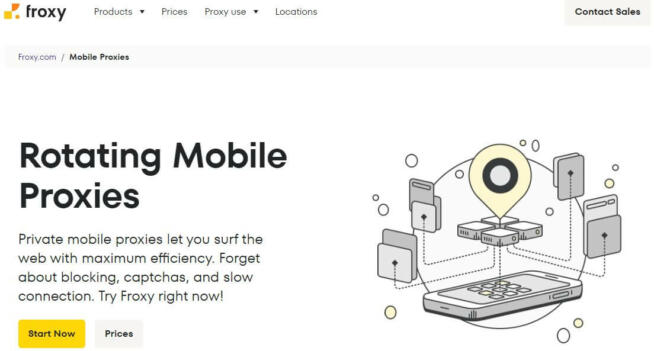
Froxy has made its mark as a private proxy provider with a significant number of IP addresses and widespread coverage. Here’s why Froxy might be a suitable choice for those in need of mobile proxies:
Large IP Pool: With over 8 million IP addresses, Froxy offers a vast selection, making it suitable for various tasks that require numerous unique IPs, such as web scraping, market research, and social media management.
Global Coverage: Offering mobile proxies in over 200 countries, including high-demand locations like the US, UK, Australia, and Canada, Froxy provides excellent geographic diversity for global internet activities.
Support for Multiple Network Types: Froxy’s mobile proxies support 3G, 4G, and LTE networks, offering versatility and compatibility with a wide range of mobile devices and applications.
High Server Uptime: The 99.99% server uptime guarantees reliable and consistent proxy service, which is essential for businesses reliant on uninterrupted internet access.
Protocol Support and Automatic Rotation: Froxy supports both SOCKS5 and HTTP protocols and features automatic proxy rotation with customizable intervals, enhancing flexibility and security.
Provision of Dedicated IP Addresses: The service offers dedicated IP addresses, which is beneficial for enhanced privacy and control over online activities.
Flexible Subscription Plans: Froxy provides a range of subscription options, starting from the affordable Mobile Lite plan to the high-end Mobile Enterprise plan, catering to different user needs and budgets.
Custom Plan Availability: For users with specific requirements, custom plans can be arranged through customer support, adding a layer of personalization to the service.
However, there are notable limitations:
Speed and Performance Issues: Froxy’s speeds and overall performance may not meet the highest standards, which could be a significant drawback for users requiring fast and efficient proxy services.
Unreliable IP Authentication: The service could benefit from improvements in IP authentication, which is a crucial aspect for secure and stable proxy usage.
In summary, Froxy is a competent option for users seeking mobile proxies with a large IP pool, global coverage, and the flexibility of dedicated IPs and customizable plans. Its support for various network types and protocols adds to its appeal. However, potential users should consider the aspects where it may fall short, such as speed, performance, and IP authentication reliability, especially when compared to top-tier providers like Bright Data or Oxylabs.
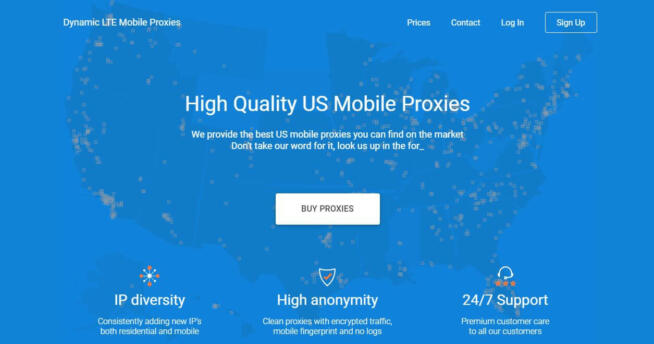
ProxyLTE positions itself as a specialized provider of LTE mobile proxies, focusing on the United States market. Here’s why ProxyLTE might be a good choice for those in need of mobile proxies, particularly in the US:
User-Friendly Interface: The service is designed to be straightforward and user-friendly, making it a suitable choice for beginners or those who prefer a hassle-free proxy experience.
Customizable Proxy Parameters: ProxyLTE allows users to customize various proxy parameters, including the state, number of proxies, and connection type (WiFi, cellular, or both). This flexibility is beneficial for users with specific proxy requirements.
Support for HTTPS and SOCKS5: The service supports both HTTPS and SOCKS5 proxies, catering to a variety of use cases and ensuring compatibility with different applications.
Enhanced Privacy with Encryption: ProxyLTE enhances user privacy with 256-bit encryption, providing an added layer of security for online activities.
Custom Plan Options and 24/7 Support: The availability of custom plan options and 24/7 customer support enhances the service’s adaptability to individual user needs.
Affordable Pricing: Compared to many competitors, ProxyLTE offers more affordable pricing, with the starting plan priced at just $0.05 per proxy per day.
Coverage Across All 50 US States: The service covers all 50 US states, making it a viable option for users needing proxies for specific regional requirements within the US.
Cryptocurrency Payment Option: Accepting cryptocurrency payments adds a level of anonymity for users who prefer privacy in their financial transactions.
However, there are some drawbacks:
Limited to US-Based IPs: ProxyLTE focuses exclusively on US-based LTE mobile proxies, which may not be suitable for users needing international proxy options.
Lack of 5G Support: As of now, ProxyLTE does not offer 5G proxies, which could be a limitation for users seeking the fastest possible mobile internet speeds.
In summary, ProxyLTE is a good choice for users looking for affordable, US-based LTE mobile proxies with a user-friendly approach, customizable options, and reliable support. Its focus on the US market and LTE technology makes it ideal for specific regional use cases but may not meet the needs of users seeking a broader range of international proxy options or the latest 5G technology.
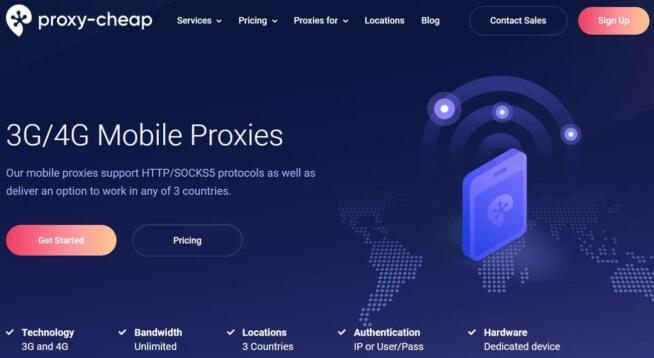
Proxy-Cheap stands as a viable option in the mobile proxy market, especially known for its affordability and decent quality. Here’s why Proxy-Cheap might be a good choice for certain users:
Coverage in Key Regions: Offering fast 3G and 4G mobile proxies in 11 countries, primarily in the US and Europe, Proxy-Cheap caters to users needing proxies in these specific regions.
Extensive Proxy Pool: With over 11 million proxies and a significant user base, it provides a wide range of proxy options, enhancing its suitability for diverse online activities.
HTTP and SOCKS5 Support with Unlimited Bandwidth: The service supports both HTTP and SOCKS5 protocols and offers unlimited bandwidth in all its plans, providing flexibility and unrestricted data usage.
High Uptime for Reliable Connectivity: A 99% uptime guarantee ensures stable and consistent internet connections, which is crucial for tasks that rely on continuous online access.
Instant Setup with Proxy Generator: Proxy-Cheap features a quick and easy setup process with its Proxy Generator, allowing users to start using the service without delays.
Use of Real SIM Card-Based Proxies: The service uses proxies based on real SIM cards, which is effective in bypassing CAPTCHAs and accessing blocked websites.
Versatility with Additional Proxy Types: In addition to mobile proxies, Proxy-Cheap also offers data center and residential proxies, broadening its applicability.
Competitive Pricing: The pricing structure is affordable compared to many competitors, making it an attractive option for budget-conscious users.
Free Trial Option: The availability of a free trial allows potential users to test the service before making a financial commitment.
However, there are some limitations:
Limited Geo-Targeting: The service’s geo-targeting capabilities are somewhat limited, which could be a drawback for users requiring precise location targeting.
Performance Variations Across Plans: Lower-priced plans may not deliver the fastest performance, which might be a concern for users with high-speed requirements.
No Refund Policy: The lack of a refund policy means users cannot reclaim their payment if dissatisfied, which could be a risk factor for new users.
In summary, Proxy-Cheap is a suitable choice for users seeking affordable mobile proxies with a reasonable balance of features and quality. Its broad proxy pool and unlimited bandwidth are notable advantages, though the limitations in geo-targeting and performance variations in cheaper plans should be considered. The free trial is a useful feature, but the absence of a refund policy may require careful consideration before subscribing.
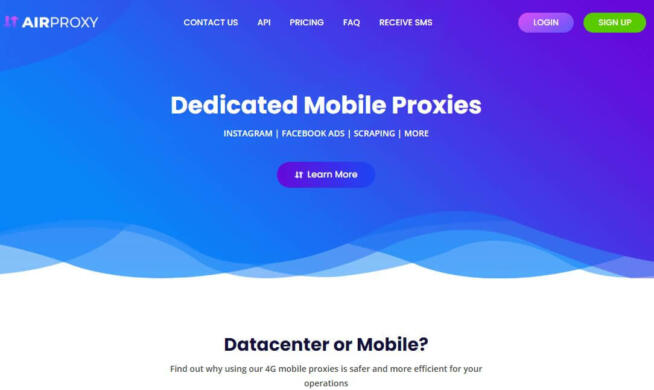
Airproxy is a specialized mobile proxy provider focusing on 4G/LTE proxies with Italian IPs. Here’s why it might be a good choice for certain users, particularly those requiring Italian mobile IPs:
Specialization in Italian 4G/LTE Proxies: Airproxy provides high-quality Italian mobile IPs, making it ideal for tasks that require undetectable proxies from Italy, such as local market research, ad verification, or accessing geo-specific content.
Automatic IP Rotation via API: The service supports automatic IP rotation, which enhances the ability to use proxies undetected and reduces the risk of bans or blocks, especially useful for activities like web scraping or managing multiple social media accounts.
Dedicated SIM Card for Each User: Users are assigned a dedicated SIM card, which ensures consistent high speeds and reliable performance, beneficial for data-intensive tasks.
User-Friendly Interface: Airproxy’s web-based interface is intuitive, making it accessible for users of all technical levels.
Effective for Social Media: The service is particularly effective at unblocking and managing social media sites, which is a key requirement for digital marketers and social media managers.
Simple Pricing Structure: Airproxy offers a straightforward single subscription plan, which includes unlimited bandwidth and limitless IP rotations, making it easy for users to understand what they’re paying for.
However, there are some notable limitations:
Geographic Limitation: Being limited to Italian carriers means that Airproxy is less suitable for users who need to bypass geo-restrictions outside of Italy or require a broader range of international IPs.
Costly Trial Period: Unlike many competitors that offer free trials, Airproxy charges for its 3-day trial, which might deter potential users who want to test the service before committing.
Single Country Focus: For users requiring a diverse range of geographic locations, Airproxy’s focus solely on Italy might be too restrictive.
In summary, Airproxy is a good option for users specifically looking for Italian 4G/LTE mobile proxies, offering high-quality, undetectable IPs with reliable performance. Its user-friendly approach and dedicated resources per user add to its appeal. However, its geographic limitation to Italy and the lack of a free trial may not meet the needs of users seeking more versatile or risk-free proxy services.
Rayobyte (formerly Blazing SEO) stands out in the proxy market with its diverse range of services and focus on ethical practices. Here’s why Rayobyte might be a good choice for certain users, particularly those needing US-based proxies:
Diverse Proxy Options: Rayobyte offers a variety of proxy types, including residential, data center, and rotating ISP proxies, along with its 4G mobile proxies. This range of options caters to various user needs.
Strategic US-Based 4G Mobile Proxies: The company’s focus on US-based 4G mobile proxies is particularly strategic for users who need proxies specifically in the United States for tasks like market research, social media management, or ad verification.
Ethical Practices: Rayobyte collaborates with US ISPs to ethically use their IP addresses, ensuring a responsible approach to proxy services without compromising user privacy.
User-Friendly Interface: While lacking dedicated mobile apps, Rayobyte’s web-based interface is user-friendly, making it easy to access and manage proxies.
Responsive Customer Support: The 24/7 live chat support provides quick assistance, enhancing the overall user experience.
Risk-Free Trial Period: Offering a two-day trial, Rayobyte allows users to test the service before committing, reducing the risk of unsatisfactory investments.
Scraping Robot Tool: The inclusion of a Scraping Robot tool for unlimited data scraping adds value, especially for users involved in large-scale web scraping operations.
Straightforward Pricing: The pricing structure is clear, with three different plans catering to varying data needs and budgets.
However, there are some drawbacks:
Limited Features in Cheaper Plans: The most affordable Starter plan may offer limited features compared to higher-tier plans.
Restricted Geographic Focus: Rayobyte’s focus on the US limits its utility for users who require a broader range of international proxy options.
Limited IP Pool Size: With around 750,000 IPs, Rayobyte’s pool is smaller than some competitors, which might be a constraint for users needing a more extensive range of IP addresses.
In summary, Rayobyte is a suitable option for users who require US-based 4G mobile proxies and value ethical practices. Its user-friendly interface, customer support, and risk-free trial period make it an attractive choice. However, its limited geographic focus and features in cheaper plans may not meet the needs of users seeking more extensive or international proxy services.
A mobile proxy uses a SIM card connected to a modem, providing you with a dedicated SIM for web browsing. These proxies, including 3G, 4G, LTE, and 5G, assign dynamic IP addresses that change periodically, based on your settings. When accessing a site through a mobile proxy, the site perceives the request as coming from a mobile device via the cellular connection of the assigned SIM card. This allows you to access sites and platforms that might be blocked for your original IP address.
2.2 Can I get a free mobile proxy?
Mobile proxies are premium services that require payment. While some offer free trials or money-back guarantees, ultimately, you need to pay to use them.
2.3 Are mobile proxies good for Instagram?
Many use mobile proxies for Instagram unblocking and automation, aiding in profile growth through tools that post automatically. Mobile proxies frequently change your IP, so even if one is flagged as spam by Instagram, you’ll quickly get a new one, enabling uninterrupted use of automation tools.
Marcus is a cybersecurity analyst with a focus on VPN and proxy services. As the founder and driving force behind a prominent VPN and proxy website, Private Proxy Guide, Marcus has emerged as a trusted authority in the digital realm. With a passion for staying ahead of evolving cyber threats, he has played a pivotal role in educating and empowering individuals and businesses to safeguard their online presence.


![19 BEST Instagram Proxies 2021 [LTE 4G & Mobile Proxies]](https://www.privateproxyguide.com/wp-content/uploads/2019/01/Best-Instagram-Proxies-150x150.jpg "19 Best Instagram Proxies [year] 4G & Residential Proxy List")
![5 BEST Sneaker Proxies 2021 [Residential & Datacenter]](https://www.privateproxyguide.com/wp-content/uploads/2019/01/best-sneaker-proxies-150x150.jpg "5 Best Sneaker Proxies in [year]: Residential & Datacenter")








![5 BEST Craigslist Proxies for Posting 2021 [& Promo Codes]](https://www.privateproxyguide.com/wp-content/uploads/2019/01/best-craigslist-proxies-150x150.jpg "Best Craigslist Proxies")
![5 BEST Ticketing & Ticketmaster Proxies 2021 [Complete List]](https://www.privateproxyguide.com/wp-content/uploads/2019/01/Best-Proxies-for-ticketmaster-ticketing-1-150x150.jpg "Best Ticketing & Ticketmaster Proxies")
![6 BEST Socks5 Proxies 2024 [Residential & Private]](https://www.privateproxyguide.com/wp-content/uploads/2020/08/best-socks5-proxies-150x150.jpg "Best Socks5 Proxies")